 Softa
SoftaLong-haul habits
Small habits for a long transition: movement, food, sleep
Supportive movement, meal rhythm, and sleep care during a multi-year peri transition. Softa helps habits stick — not as medical protocols or cures.
Softa editorial team · Last updated: September 25, 2026 · 3 min read · Medical review pending
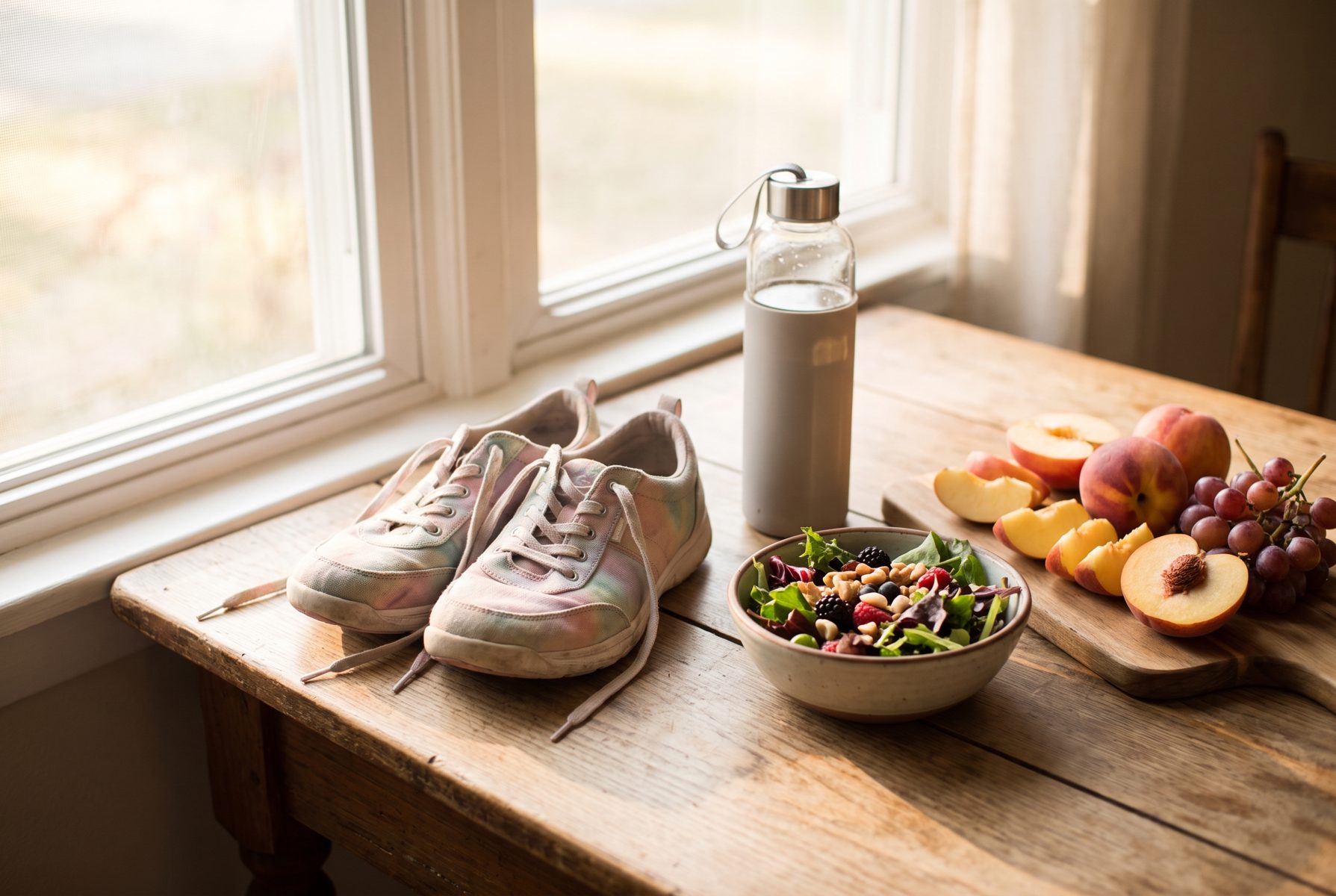
If perimenopause often lasts several years, the habits that help are the ones you can still recognize next season. Softa’s stance: movement, nutrition rhythm, and sleep care are supportive habits Softa helps you notice and stick with — not Softa medical protocols, prescriptions, or cure plans.
Movement: consistency over punishment
When energy is weird, all-or-nothing workouts collapse. Many people do better with:
- Walks most days
- Strength they can recover from
- Mobility for stiff mornings
Softa can help you see which movement actually happens — and how you feel around it. Softa does not prescribe exercise therapy.
Food: rhythm over perfection
Skipped meals and chaotic evenings can make mood and energy feel sharper for some people. Gentle aims:
- Regular-enough meals
- Protein/fiber patterns that fit your life
- Noticing alcohol/caffeine timing if they cluster with symptoms
No Softa meal plan claims to reverse peri. Personal observation beats dogma — especially with clinician guidance for medical diets.
Sleep: protect the foundation
Wind-downs, cooler rooms, earlier caffeine cutoffs (if helpful for you), and logging 3 a.m. waking patterns matter because sleep touches everything else. Softa tracks; Softa doesn’t treat insomnia.
Use Softa for long-haul habit awareness
Small repeats across a long transition beat heroic weeks. Stay with Softa →
Optional 7-day check
Pick one habit lane for a week. Observe. Adjust kindly.
Habit stacking for foggy seasons
Attach a tiny habit to something you already do: after coffee, five minutes outside; after brushing teeth, a wind-down light rule. Softa can help you notice adherence without turning life into a spreadsheet cult. If a habit plan conflicts with medical advice you’ve been given, follow your clinician.
When to talk to a clinician
Habits don’t replace evaluation for heavy bleeding, depression, possible apnea, nutritional deficiencies, or other conditions. Ask before major diet/exercise changes if you have health constraints.
When habits collide with symptoms
Some weeks, sleep care is the only habit that fits. That’s still long-haul behavior. Softa prefers flexible floors over rigid streaks that collapse and produce shame.
Putting it together
Small habits are how long transitions stay human. Softa helps them remain visible.
If you take one step after reading: either start the Softa check, log tonight’s sleep/mood, or prepare a visit summary before your next appointment. One primary action beats ten tabs of worry. Softa remains not a medical device and not a diagnosis — a clarity companion for a transition that often lasts several years, with supportive habits Softa helps you notice and stick with, and clinicians for decisions that require medicine.
Everyday Softa habit floors
Pick a walk floor, a meal-rhythm floor, and a wind-down floor small enough for bad weeks. Softa helps you see adherence. These are supportive habits Softa helps you stick with — not Softa medical protocols, not peri cures.
Habit review every month
Once a month in Softa, ask: which supportive habit actually happened? Which correlated with better days? Adjust floors. Softa habit nudges stay non-medical: movement, food rhythm, sleep care as companions through a long transition.
One next step
Choose the smallest viable habit floor for this week. Softa will help you see if it stuck.
Three floors Softa can help you keep
Movement floor: 10-minute walk most days. Food floor: fewer skipped meals. Sleep floor: a repeatable wind-down cue. Softa habit awareness watches floors — not Olympics. Across peri’s long arc, floors keep dignity available on bad symptom weeks without Softa claiming medical treatment status.
FAQ
Will these habits end perimenopause?
No. They may support how you feel during it.
Is Softa a fitness or diet app?
Softa is a symptom tracker with supportive habit nudges — not a medical nutrition or PT service.
What if I can’t keep habits during a rough month?
Shrink the habit. Softa prefers sustainable over perfect.
Medical disclaimer: Softa is not a medical device and does not prescribe exercise, diets, or treatments. Educational only. Consult a qualified clinician.