 Softa
76 million women across the US, UK, Canada, Australia and New Zealand are in the years of perimenopause and menopause. You're not alone.
Could this be perimenopause?
Noticing changes in your sleep, mood or cycle? Start with a few questions to make sense of what you're experiencing.
Two minutes. A starting point for understanding, not a diagnosis.
Track your changes with Softa


Free download • Premium features available · Coming soon to iOS and Android — tap a badge to get notified.


What have you noticed lately?
Everything you need to understand your transition

Body map
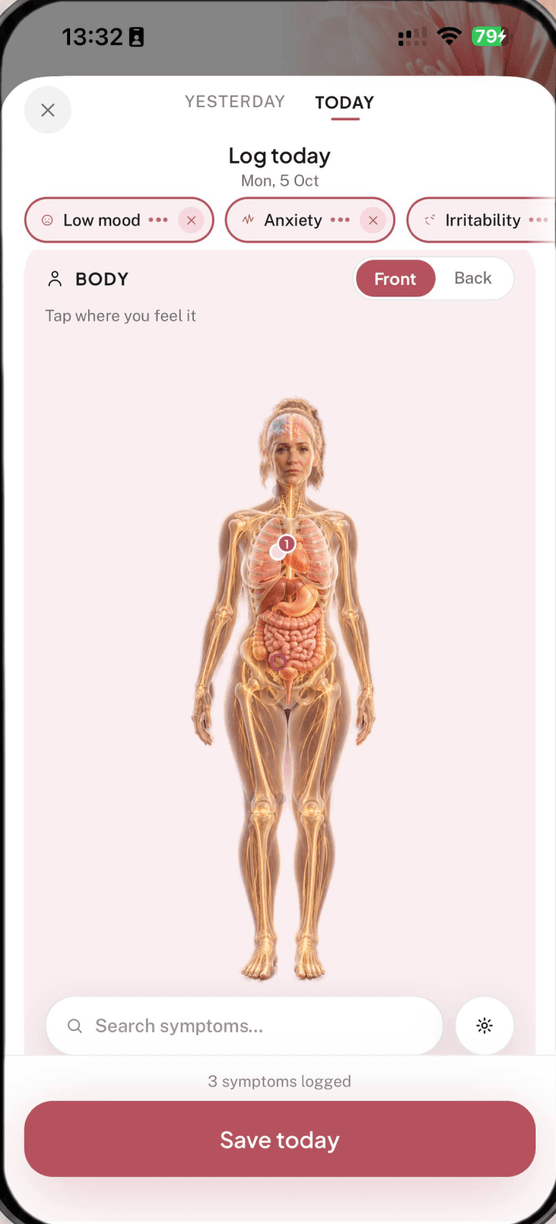
Tap where you feel it — log symptoms in seconds

Detective
Spots which symptoms tend to come together in your own data

28-day pattern report
What came up most, how it changed, and what to ask

Report for your doctor
Export a clear PDF of your symptoms, cycle and questions

Cycle insights
Your usual cycle range and how much it varies

Sleep & night wake-ups
See how your nights connect to the next day

Treatment tracker
Keep HRT and medications next to how you feel

Calm breathing
Box breathing for 3 a.m. and hot-flash moments


What is Softa?
Softa is a perimenopause and menopause companion app. You log how you feel in about ten seconds, Softa shows which patterns keep repeating in your own records, and it turns weeks of notes into a one-page summary and questions to take to your doctor.
It’s a tracker, not a diagnosis. It won’t tell you that you are in perimenopause or menopause, and it doesn’t replace a doctor. It helps you notice what changes, so the conversation with a doctor starts from facts instead of memory.
- 1
Log in about ten seconds
Tap where you feel it, or pick a mood or a night’s sleep. No forms, nothing to lose if you miss a day.
- 2
See which patterns repeat
Softa lines up symptoms, cycle timing, sleep and mood across your own records and shows what keeps repeating.
- 3
Bring a summary to your doctor
Weeks of logs become a one-page PDF and a short list of questions, ready before your appointment.
Softa at a glance
- What it is
- A perimenopause and menopause symptom tracker and companion app.
- What it does
- Logs symptoms, sleep, mood and cycle changes; shows patterns in your own records; prepares a one-page summary for your doctor.
- What it is not
- Not a medical device. It doesn’t diagnose, prescribe or predict periods.
- Who it’s for
- Women and people who menstruate who notice changes in sleep, mood, energy or their cycle, usually from their late 30s to their 50s and beyond.
- Platforms
- iPhone and Android (launching soon), plus a free quiz on the web.
- Language
- English first.
- Privacy
- No ads and no selling of data. Export or delete your data from inside the app.
- Price
- Free to start (Body Map, logging, articles). Premium unlocks more — take the quiz to see your personal offer, including a free trial.

It’s 3am and you’re awake again. Your period is late, or early, or gone. You lose the word for the thing you use every day. None of this is in your head — it just doesn’t have a name yet.
8 in 10
women get hot flashes or night sweats in perimenopause and menopause (NICE NG23).
The list is longer than anyone told you
Most checklists stop at hot flashes and mood. Softa tracks those and the ones you only find out about from other women.
Usually on the list
- Hot flashes
- Night sweats
- Irregular periods
- Mood swings
- Brain fog
Rarely on the list — and just as real
- Waking at 3am
- Itchy ears
- Frozen shoulder
- Heart palpitations
- Cold flashes
- Weight changes with no reason


The long road


AI-generated image, not a real person.
It isn’t a moment. It’s years.
People talk about “menopause” as if it were an event. It’s really a long transition, and most of us are never told how long.
≈ 7years
1day
Forlife
Perimenopause
Usually around 7, sometimes up to 14. Periods turn unpredictable and symptoms come and go.
Menopause
The point 12 months after your last period. Average age: about 51.
Postmenopause
Hormones settle at a lower level. Some symptoms fade, some need looking after.
7.4
years: the median length of hot flashes and night sweats in one large US study (SWAN), and longer for some women. Long enough to manage, not just endure.
Hormones talk to the whole body
Estrogen is made mostly in the ovaries, but its receptors sit in the brain, bones, heart, skin, gut and bladder. So when levels start to swing, and later settle lower, many systems feel it at once.
That’s why perimenopause isn’t only hot flashes. It can look like broken sleep, a shorter fuse, aching joints, a foggy afternoon. Different symptoms, one underlying shift.
- Brain
- Sleep
- Bones
- Heart
- Skin
- Gut
- Bladder
- Mood
Unnoticed, it wears you down quietly
When you don’t know what’s going on, it’s easy to blame yourself, push through, and slowly do less of what you love. Nothing dramatic, just a bit less energy, a bit less sleep, a bit less of you.
Writing symptoms down turns “I feel off” into a pattern you can see, and something you can take to a doctor.
It was never in your head. It just didn’t have a name yet.
Small, steady things make it easier on your body
Movement, food and sleep won’t switch symptoms off, but for many women they make the years easier to carry, and the effect tends to show up over weeks, not overnight. Softa gives you gentle, level-aware versions of each.

Move
Regular strength work helps keep muscle and bone strong, which matters more as estrogen falls.

Eat
Steady, balanced meals with enough protein and fibre help energy and mood stay level through the day.

Rest
A cool room and a steady sleep routine make broken nights easier to live with while things settle.
Images are AI-generated and not real people. Sources: National Institute on Aging, “What is menopause?”; Avis NE et al., JAMA Internal Medicine, 2015 (SWAN study). General information only. Softa doesn’t diagnose or treat; talk to a doctor about your own symptoms.
Which stage sounds like you?
Four stages, one honest map — see what's common at each, then check with your clinician.

Early signs
Periods still regular — small changes may be starting.
Typical signs
- Cycles usually still regular, maybe subtly off.
- Sleep, mood, or energy dips some months more.
- Many haven't connected this to hormones yet.

Perimenopause
Cycles change — timing, flow, length; symptoms often more noticeable.
Typical signs
- Cycle length and flow vary more than before.
- New symptoms may appear: flashes, sleep, mood.
- Gaps between periods usually still under 60 days.

Postmenopause
Hormone levels settle low and steady.
Typical signs
- More than 12 months since your last period.
- Symptoms vary — some ease, some continue.
- Bone and heart health become bigger priorities.
From “something’s off” to something you can show a doctor
Four small steps. Nothing to set up, and nothing to lose if you miss a day.
- 1
Log it in ten seconds
A symptom, a mood, a night’s sleep. Real dates, no predictions, and nothing to lose if you miss a day.
- Symptoms
- Mood
- Sleep
- 2
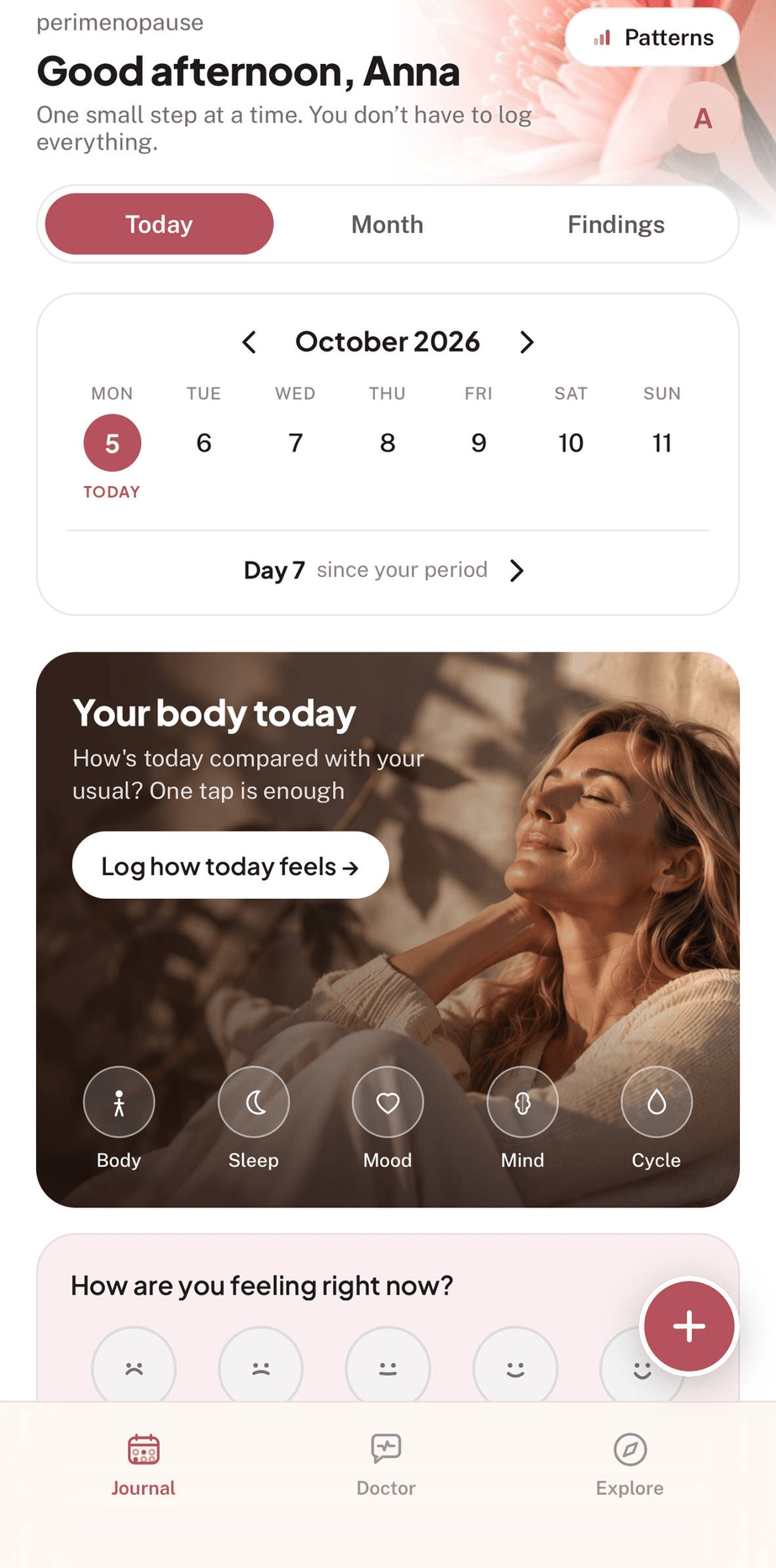
See what keeps repeating
Softa lines up symptoms, cycle timing, sleep and mood, so the patterns you couldn’t see in the moment start to show.
- Cycle timing
- Sleep
- Mood
- 3
Test what you suspect
When something shows up next to a symptom more than chance would explain, check it yourself over a real 7-day test. A pattern to verify, never a diagnosis.
- One suspect
- 7 real days
- Your verdict
- 4
Take it to your appointment
Weeks of logs become a one-page summary and the questions worth asking, so the visit starts from evidence instead of memory.
- One page
- Your questions
- Share it
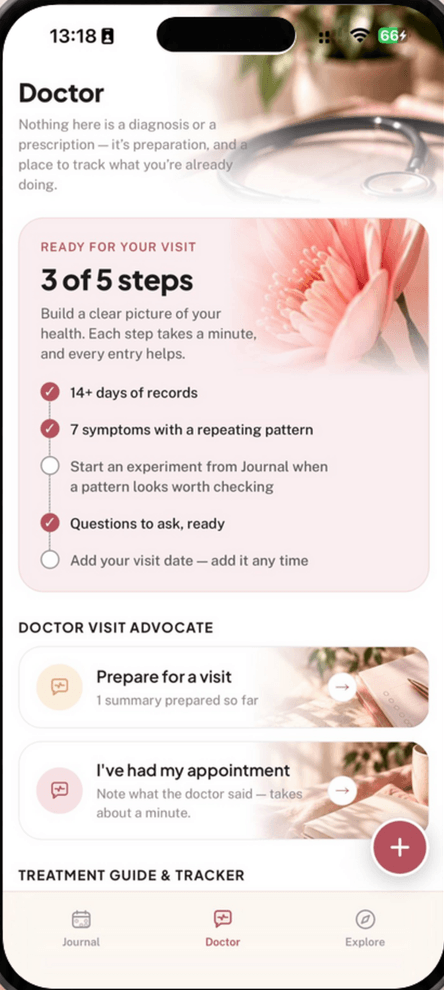


Real Softa screens; example cards shown for context
Everything a changing body asks of you, in one calm place

Log it while life is happening
Ten seconds, works offline, nothing to lose if you skip a day.
Log in seconds
Hot flashes
Moderate · 9:10 AM
Waking at 3am
Last night
Your real cycle range
24–41 days
Night wake-ups
Mostly 3–4am, last 7 nights
7-day test
Afternoon coffee and hot flashes
Day 5 of 7
One page for your doctor
Top symptoms, trends, cycle history and the questions worth asking.
How the Visit Pack works →Private by default
Never sold. Export or delete everything, any time.
Our privacy promise →Walk in with more than “I’ve been feeling off”

A scattered week
One page you can use
Last 30 days
- •Hot flashes: 9 times in 30 days, mostly overnight
- •Cycle: day 34 and counting — longest gap in 6 months
- •Brain fog: noted 5 times, worse midday
Questions worth asking
- “Could my sleep disruption be hormone-related?”
- “Is a 34-day gap still “irregular,” or worth flagging?”


Not another period app
vs. period-tracking apps
Built for cycles that are still regular. Softa is built for cycles that aren't.
vs. a symptom log
A log tells you what happened. Softa tells you what tends to happen together — then lets you test whether it's real, over 7 real days.
vs. a notes app
Notes don't connect a symptom today to a pattern from three weeks ago. Softa does.
vs. doing nothing
Most people spend a year unsure before they have language for what's happening. This shortens that.

Built because “you’re fine” isn’t an answer
Too many people get told their symptoms are normal, or nothing, or just stress — and spend months piecing together on their own that something real is happening. Softa exists to shorten that part: not by diagnosing anything, but by making your own pattern visible sooner, in language you can bring to a doctor.
- Never sold. Export or delete everything, any time.
- Informed by published guidance: NICE NG23, The Menopause Society, STRAW+10.
Perimenopause, menopause and postmenopause in plain words
Perimenopause is the transition before menopause. It can bring irregular periods, broken sleep, mood changes, hot flashes and night sweats, brain fog and joint aches, and it often starts in the 40s, sometimes earlier.
- Perimenopause
- The years before your final period, when hormone levels swing and cycles and symptoms change. It usually lasts around 4 years on average, but the range is wide, from a few months to about a decade.
- Menopause
- A single point in time, confirmed after 12 months in a row without a period. The average age is about 51 in the US.
- Postmenopause
- Everything after that 12-month mark, for the rest of life. Some symptoms ease, others may need looking after.
- About 8 in 10 women get hot flashes or night sweats in perimenopause and menopause (NICE guideline NG23).
- Blood tests are usually not a reliable way to tell whether you are in perimenopause: NICE recommends against using FSH or AMH tests to diagnose it in women aged 45 and over, because levels swing too much from day to day.
- That is why your own dated record of symptoms, sleep and cycle changes is useful evidence to bring to a doctor.
Sources: NICE guideline NG23, “Menopause: identification and management” (nice.org.uk/guidance/ng23); Cleveland Clinic, “Perimenopause” (my.clevelandclinic.org); STRAW+10 staging system (Harlow et al., 2012). General information, not medical advice; talk to a doctor about your own symptoms. Last updated 25 September 2026.

What are you noticing?
- I’m waking at 3am
- My cycle is changing
- My mood feels out of my control
- Hot flashes and night sweats
- Brain fog
- Something else
Two minutes. A starting point, not a diagnosis.
Questions people ask before starting
What is Softa?
Softa is a perimenopause and menopause companion app. You log symptoms, sleep, mood and cycle changes in about ten seconds, and it shows the patterns that repeat in your own records instead of a generic checklist. It then prepares a one-page summary and questions for your doctor.
Is Softa a medical device? Does it diagnose?
No. Softa is a tracker and organiser, not a medical device. It doesn’t diagnose perimenopause or menopause, prescribe, or predict periods. It suggests a starting point from your answers, you confirm or correct it, and only a doctor can tell you where you are.
Can Softa tell me if I’m in perimenopause?
Not with certainty, and no app or single blood test can. Softa can show whether your answers and records look like the transition and help you notice patterns. Bring that record to a doctor, who can evaluate your symptoms, age and history.
How does Softa work?
You log a symptom, a mood or a night’s sleep in seconds. Softa lines up symptoms, cycle timing, sleep and mood, points out what keeps showing up together, and lets you test a hunch for 7, 14 or 28 days. It then turns your records into a summary for your appointment.
Does Softa work with irregular cycles?
Yes, that is what it is built for. Many period apps assume regular cycles and predict from an average. Softa records your real dates, shows your cycle as a range instead of a single number, and never makes fake predictions when your cycle is changing.
Is Softa for menopause and postmenopause too?
Yes. After your last period, sleep, mood, energy and joint aches can continue, and strength and habits matter more. Softa keeps tracking symptoms, offers strength and breathing sessions, and prepares summaries for check-ups, without putting your cycle in the centre.
What data does Softa collect, and is it private?
Softa stores the symptoms, cycle and sleep records you enter, and your account details. There are no ads and no selling of data. You can export everything or delete your account from inside the app. Health data is never sent to advertising platforms.
Is Softa free?
Yes, to start — Body Map logging, symptom and cycle tracking, and the full Explore article library are free with no time limit. Premium unlocks the 28-day challenge, Trigger Detective and the Visit Pack. Take the quiz to see your personal offer, including a free trial. See the pricing page for the full breakdown.
When is Softa available, and on which devices?
Softa is being prepared for iPhone and Android and is not in the stores yet. The store buttons on this page will link to the listings when they go live. Until then you can take the quiz on the web.
How long does perimenopause last?
About 4 years on average, but the range is wide, from a few months to around a decade, according to Cleveland Clinic. Menopause itself is a single point, confirmed after 12 months without a period. A dated record helps you and your doctor see how your own transition is going.
Inside Softa
Real screens — logging, patterns, the 28-day report and getting ready for a visit.


